
Top 5 Challenges Telecom Vendors Face in Global Procurement

Global telecom procurement is one of the most competitive and complex ecosystems in the modern digital economy. Telecom vendors, from infrastructure providers to software solution companies, depend heavily on global procurement opportunities to grow their business, secure long-term contracts, and expand into new markets. However, accessing and winning these opportunities is far from simple.
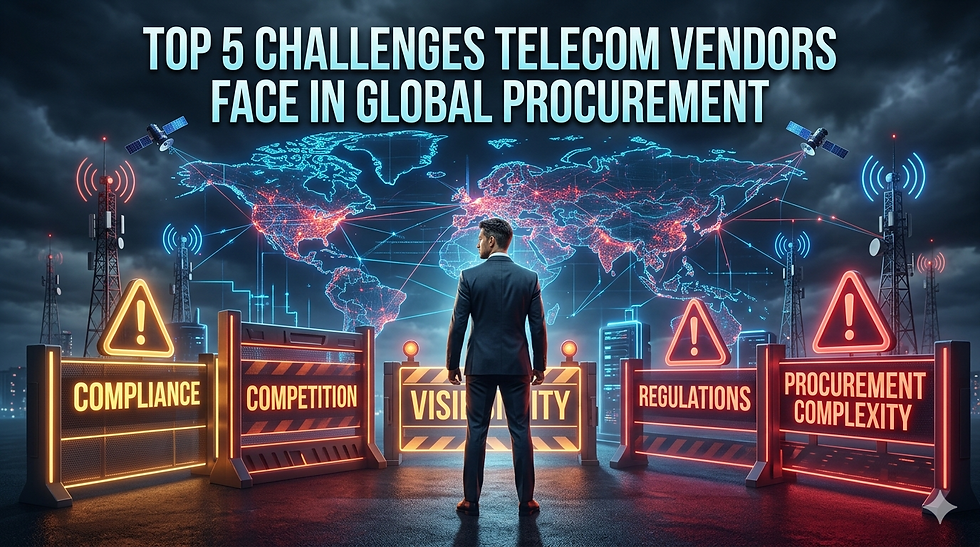
The telecom procurement process involves multiple stakeholders, strict compliance requirements, fragmented sourcing systems, and intense global competition. Vendors must navigate telecom RFQs (Request for Quotation), RFPs (Request for Proposal), vendor qualification frameworks, and regulatory standards, all while competing against well-established global suppliers.
Understanding the challenges telecom vendors face in global procurement is critical to improving success rates, optimizing vendor strategy, and unlocking new revenue opportunities. This guide explores the top five procurement challenges and how vendors can overcome them in today’s global telecom sourcing landscape.
Understanding the Global Telecom Procurement Ecosystem
Global telecom procurement refers to the structured process telecom operators, network providers, and telecom enterprises use to source equipment, infrastructure, and services from vendors worldwide. This process ensures telecom operators acquire reliable, cost-effective, and scalable solutions.
The telecom procurement lifecycle typically includes:
Vendor discovery and sourcing
Request for Information (RFI)
Request for Quotation (RFQ)
Request for Proposal (RFP)
Technical and financial evaluation
Vendor selection and contract award
Organizations often follow procurement standards aligned with industry bodies such as GSMA to ensure transparency, compliance, and operational efficiency.
Telecom procurement is not just about purchasing—it is a strategic function that directly impacts network performance, service quality, and long-term business growth.
Who Are Telecom Vendors in the Global Market
Telecom vendors are companies that provide equipment, software, infrastructure, or services to telecom operators and service providers. These vendors play a critical role in building and maintaining telecommunications networks.
Common types of telecom vendors include:
Network infrastructure providers
Telecom equipment manufacturers
Software and OSS/BSS providers
Managed service providers
Telecom technology solution providers
Major global telecom vendors such as Ericsson, Nokia, and Huawei dominate the market due to their established reputation, technical expertise, and global presence.
However, small and mid-size telecom vendors often face significant barriers when trying to compete in global procurement.
Overview of Global Telecom Procurement Opportunities
Telecom procurement opportunities exist across multiple regions and sectors, including:
Mobile network operators
Internet service providers
Government telecom projects
Private telecom infrastructure deployments
Enterprise telecom modernization projects
These opportunities are typically published through telecom procurement portals, sourcing platforms, and direct operator procurement systems.
However, the decentralized nature of telecom sourcing makes it difficult for vendors to identify and access relevant procurement opportunities efficiently.
Challenge #1: Limited Visibility into Global Procurement Opportunities
One of the biggest challenges telecom vendors face is the lack of visibility into global telecom tenders, RFQs, and procurement opportunities.
Unlike centralized marketplaces, telecom procurement opportunities are often distributed across multiple platforms, operator websites, and regional procurement systems.
This creates major barriers for vendors trying to identify relevant opportunities.
Fragmented Procurement Platforms
Telecom procurement opportunities are scattered across:
Telecom operator procurement portals
Government tender portals
Regional procurement platforms
Private sourcing networks
Vendors must monitor multiple systems manually, which increases operational effort and reduces efficiency.
As a result, vendors often miss high-value opportunities simply because they are unaware of them.
Lack of Procurement Transparency
Many telecom procurement systems lack transparency. Vendors may not have access to complete information, including:
Vendor requirements
Evaluation criteria
Procurement timelines
Decision-maker insights
This lack of transparency reduces vendor confidence and limits fair competition.
Challenge #2: Complex Compliance and Regulatory Requirements
Telecom is one of the most regulated industries globally. Vendors must comply with strict legal, technical, and regulatory standards.
Compliance requirements may include:
Technical certifications
Regulatory approvals
Security compliance
Financial qualifications
Regional telecom regulations
Failure to meet compliance requirements can disqualify vendors from procurement processes.
Regional Regulatory Variations
Each country has its own telecom procurement regulations. Vendors operating globally must adapt to:
European telecom compliance standards
Middle East telecom regulations
Asia-Pacific telecom procurement frameworks
Government procurement policies
Managing compliance across multiple jurisdictions adds complexity and increases operational costs.
Documentation and Certification Burden
Telecom procurement requires extensive documentation, including:
Company certifications
Financial statements
Technical capability documents
Vendor qualification forms
Preparing and maintaining these documents requires significant resources and administrative effort.
Challenge #3: Intense Global Competition Among Vendors
Global telecom procurement is highly competitive. Vendors compete against both local suppliers and multinational corporations.
Large telecom vendors have advantages such as:
Established brand reputation
Proven track record
Global operational capacity
Advanced technical capabilities
This creates entry barriers for smaller vendors.
Competition from Established Vendors
Large vendors such as Ericsson, Nokia, and Huawei often dominate procurement processes due to:
Existing relationships with telecom operators
Strong financial capacity
Proven deployment experience
New vendors must work harder to build credibility and trust.
Price Pressure and Margin Constraints
Telecom procurement is highly price-sensitive. Vendors often compete primarily on pricing, which leads to:
Reduced profit margins
Increased cost pressure
Aggressive pricing competition
This makes it difficult for vendors to maintain profitability while remaining competitive.
Challenge #4: Complex Procurement Processes and Long Sales Cycles
Telecom procurement processes involve multiple evaluation stages and stakeholders. This makes the procurement cycle longer and more complex compared to other industries.
Procurement cycles may take several months or even years.
Multi-Stage Vendor Evaluation Process
Telecom operators evaluate vendors based on multiple factors:
Technical capability
Financial stability
Compliance readiness
Deployment experience
Vendor reliability
Each stage requires vendor participation and documentation.
Slow Decision-Making and Approval Cycles
Telecom procurement decisions involve multiple departments, including:
Technical teams
Procurement teams
Legal departments
Executive management
This multi-layer approval structure slows down procurement decisions.
Long procurement cycles increase vendor uncertainty and delay revenue generation.
Challenge #5: Lack of Direct Access to Decision-Makers
Another major challenge telecom vendors face is limited access to procurement decision-makers.
Vendors often communicate through procurement intermediaries rather than directly with telecom operators.
Procurement Gatekeepers and Vendor Barriers
Procurement teams act as gatekeepers, controlling vendor access to procurement processes.
This makes it difficult for vendors to:
Present their solutions directly
Build relationships with decision-makers
Demonstrate their value proposition
Limited Vendor Relationship Opportunities
Strong relationships are critical in telecom procurement. Vendors without established relationships often struggle to win contracts.
Relationship-driven procurement favors vendors with existing networks and industry presence.
Role of Procurement Platforms in Solving These Challenges
Modern telecom procurement platforms are transforming how vendors access global opportunities.
Digital procurement platforms provide:
Centralized access to telecom RFQs and RFPs
Verified procurement opportunities
Improved transparency
Direct vendor-operator engagement
Streamlined procurement workflows
Enterprise procurement systems such as those powered by SAP and specialized telecom procurement platforms help vendors identify and access relevant opportunities more efficiently.
Benefits of Centralized Telecom Procurement Platforms
Centralized procurement platforms offer several advantages:
Improved Opportunity Visibility
Vendors gain access to global telecom procurement opportunities from a single platform.
This improves efficiency and reduces missed opportunities.
Increased Procurement Transparency
Centralized platforms provide clear procurement information, including:
Vendor requirements
Evaluation criteria
Procurement timelines
This helps vendors prepare stronger proposals.
Faster Vendor Access to Global Markets
Procurement platforms enable vendors to access international telecom opportunities without needing regional presence.
This supports global expansion and business growth.
Future of Telecom Procurement and Vendor Opportunities
Telecom procurement is rapidly evolving due to digital transformation, automation, and AI-driven procurement systems.
Future telecom procurement trends include:
AI-powered vendor matching
Automated procurement workflows
Increased procurement transparency
Digital procurement platforms
Global vendor access democratization
These innovations will make telecom procurement more efficient and accessible.
Vendors that adopt digital procurement strategies will gain competitive advantages.
Conclusion: How Telecom Vendors Can Overcome Global Procurement Challenges
Global telecom procurement presents significant challenges, including limited visibility, regulatory complexity, intense competition, complex procurement processes, and restricted access to decision-makers.
However, vendors that adopt strategic approaches can overcome these barriers.
Key strategies include:
Leveraging centralized telecom procurement platforms
Improving compliance readiness
Strengthening vendor positioning and credibility
Monitoring global procurement opportunities consistently
Building strong procurement relationships
As telecom procurement continues to evolve, vendors that embrace digital procurement solutions, improve visibility, and optimize procurement strategy will be best positioned for long-term success.
Global telecom procurement is no longer just about competing—it is about gaining access, building trust, and positioning strategically in a rapidly evolving telecom ecosystem.
FAQS
1. What is telecom procurement?
Telecom procurement is the process telecom operators use to source equipment, services, and infrastructure from qualified vendors through RFQs, RFPs, and vendor evaluation.
2. Why is global telecom procurement difficult for vendors?
It is difficult due to limited opportunity visibility, strict compliance requirements, intense competition, and complex procurement processes.
3. How do telecom vendors find procurement opportunities?
Vendors find opportunities through telecom procurement platforms, operator portals, and global telecom tender and RFP platforms.
4. What do telecom operators look for in vendors?
Operators evaluate vendors based on technical capability, certifications, pricing, reliability, and past project experience.
5. How can vendors increase success in telecom procurement?
Vendors can improve success by using centralized procurement platforms, maintaining compliance, and submitting competitive proposals.


Comments